
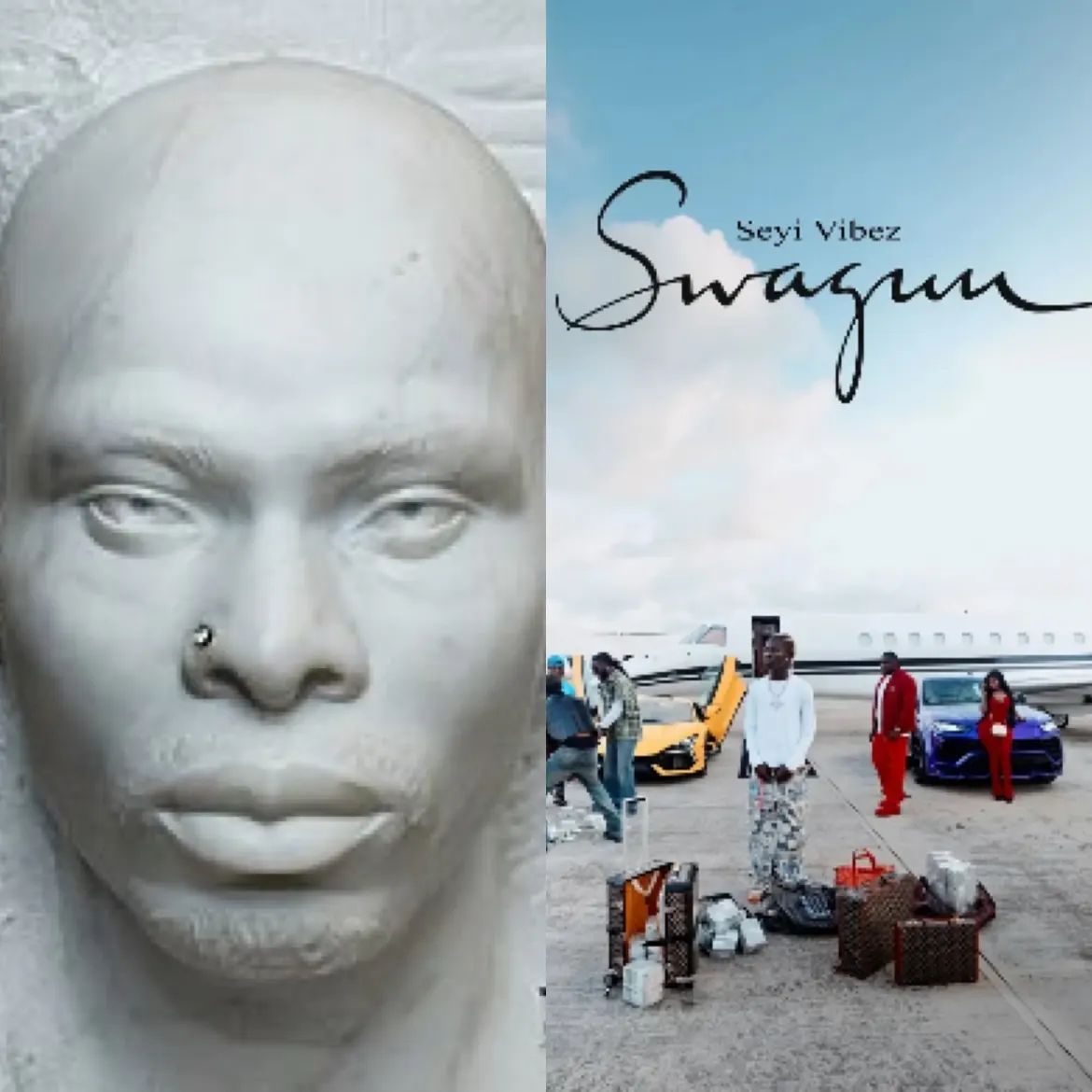
Asake and Seyi Vibez have reached a point where neither artist can reasonably be described as simply “upcoming.”
They are two of the most important names in Nigeria’s current street-pop conversation, but their latest albums show just how differently two artists from a similar musical space can approach the next stage of their careers.
Asake’s M$NEY arrived on May 1 as his fourth studio album and the first released through his Giran Republic imprint in partnership with EMPIRE after his YBNL era. The project moved away from some of the raw urgency of his earlier work and embraced a smoother, more spacious sound. Critics noticed the change: Pitchfork described the album as breezy but cautious, while The Native praised its sonic polish but questioned the lyrical depth.
Seyi Vibez’s SWAGUU arrived in September with a very different proposition. The 14-track project keeps its centre of gravity firmly in Nigerian street-pop while looking outward, with Burna Boy credited as executive producer and Quavo appearing as the only featured artist. Seyi has explained that his approach to international expansion is not to change his sound for foreign audiences, but to bring those audiences into his world.
That difference is what makes these two albums interesting to compare.
M$NEY sounds like an artist who has already conquered the first mountain and is now thinking about presentation, refinement and longevity.
SWAGUU sounds like an artist still hungry to prove how far his sound can travel.
Asake’s album is deliberately polished.
The production creates more breathing room around his vocals, with the Fuji-inflected rhythms that helped establish his identity surrounded by softer textures and a more spacious sonic palette. Tracks such as “Forgiveness,” “Gratitude,” “Why Love,” “Worship,” “Rora” and “Oba” show an artist increasingly comfortable with restraint.
That evolution has divided listeners.
Premium Times described M$NEY as a move toward spiritual reflection and a more diverse global sound. Pitchfork, however, argued that the smoother approach came at the expense of some of the friction and unpredictability that made Asake’s earlier music so distinctive.
That criticism doesn’t erase the album’s commercial performance.
M$NEY opened with 42.2 million Spotify Nigeria streams in its first week, according to chart tracking reported by Album Talks, setting a new opening-week record for an album on the Nigerian Spotify chart at the time.
And Asake didn’t stop at the album itself.
In June, he took M$NEY to London’s Theatre Royal Drury Lane for an exclusive Spotify performance featuring an orchestra of more than 40 musicians, a live choir and band. The resulting M$NEY Live in London concert film and live album turned the project into a different kind of experience.
That is important because Asake’s M$NEY era increasingly feels like a complete brand experience rather than simply an album campaign.
Seyi Vibez is taking a different route.
SWAGUU is still unmistakably Nigerian.
The Yoruba songwriting, melodic street-pop delivery and mixture of hustle, faith, relationships and ambition remain at the centre of the project. But there is a noticeable effort to make the world around that sound bigger.
The album contains 14 tracks, with Quavo appearing on the closing title track. Keeping the feature list to a single guest means the project spends most of its runtime allowing Seyi Vibez himself to carry the narrative.
That choice works particularly well because SWAGUU isn’t trying to hide where Seyi Vibez comes from.
It is trying to export it.
The early numbers suggest that strategy is connecting with listeners.
On September 18, SWAGUU topped the Apple Music Nigeria album chart, while Seyi Vibez occupied a remarkable portion of the platform’s Nigerian songs chart. “GTA” was No. 1, “BACK 2 U” was No. 3, and several other songs from the album appeared throughout the Top 40.
Spotify’s Nigerian daily chart showed a similar pattern, with “VOLUME,” “GTA,” “ILOME,” “DIAMONDS,” “PANSA,” “GOD” and other SWAGUU tracks occupying the upper end of the chart on September 18.
Audiomack has also recorded more than 51 million total plays for the album on Seyi Vibez’s official Audiomack upload as of the latest available data.
That early reaction gives SWAGUU a very different energy from M$NEY.
Asake’s project feels like an artist consolidating his position.
Seyi Vibez’s feels like an artist expanding his territory.
And perhaps that is the most interesting part of the comparison.
Asake has spent the past few years taking a sound that was deeply connected to Lagos street culture and turning it into something capable of filling major international stages. His Spotify-backed London performance made that evolution particularly visible, placing songs rooted in Nigerian street-pop inside a formal theatre setting with an orchestra and choir.
Seyi Vibez, meanwhile, appears determined to take the streets with him.
His own explanation of SWAGUU makes that intention clear: he wants international listeners to fit into his world rather than changing the music simply to make it more internationally acceptable.
That distinction gives both albums their identities.
M$NEY asks what happens when Asake’s street-pop sound becomes more refined, spacious and internationally presented.
SWAGUU asks how far Seyi Vibez can take his existing identity without sanding away the qualities that made people connect with him in the first place.
Neither approach is inherently more important.
They simply represent different stages of artistic ambition.
Asake is exploring what his music looks like after global recognition.
Seyi Vibez is exploring what global recognition could look like for him.
And that is why the comparison between the two artists remains so compelling.
They may share Yoruba-inflected melodies, street-pop rhythms and a strong connection to Nigerian culture, but their current ambitions are no longer identical.
M$NEY is the sound of an established star refining his world.
SWAGUU is the sound of a street-pop star opening his world up.
The more interesting question, therefore, isn’t simply which album is “better.”
It’s which direction will have the greater long-term impact on Nigerian street-pop?
For now, both artists have given the culture something worth discussing.
And with SWAGUU only days old, its story is still being written.
Which album are you playing more right now — Asake’s M$NEY or Seyi Vibez’s SWAGUU? And which artist do you think has pushed street-pop further in 2026?
0 comments